In the fast-paced world of software development, choosing the right team structure is crucial for success. Different projects may require different approaches, and understanding the nuances of various development team structures is essential for effective collaboration and project delivery. In this post, we’ll explore four distinct models: Agile, Classic, Tribe, and Project-Based structures.
1. Agile: Embracing Flexibility – One PO to Rule Them All
Agile development has become a cornerstone for many teams aiming for adaptability and responsiveness. In the Agile model, teams work in short, iterative cycles called sprints. Each sprint results in a potentially shippable product increment, allowing for regular feedback and adjustments. The Agile structure typically includes cross-functional teams, with roles like Scrum Master, Product Owner (PO), and developers working collaboratively. This model thrives on communication, adaptability, and a shared commitment to delivering value.
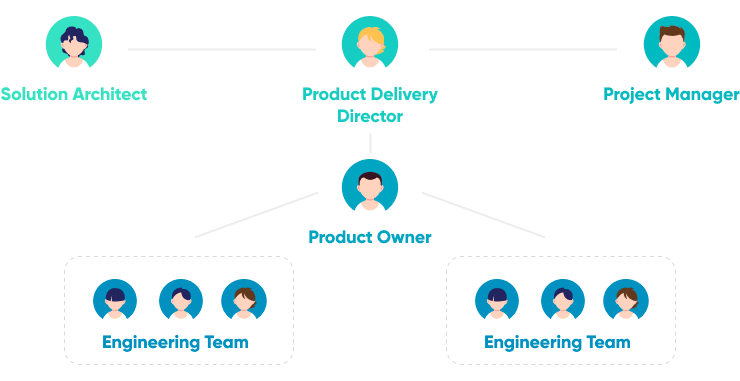
The Classic team structure is reminiscent of traditional project management methods. Here, a single Product Owner oversees the entire team, serving as the bridge between stakeholders and the development team. This centralized decision-making approach can provide clarity and a streamlined communication process. However, it may face challenges in scaling, as a single point of contact can become a bottleneck for larger projects.

Pros
- Clear and Well-Defined Phases
- Stable Requirements
- Predictability
- Suitable for Small Projects
Cons
- Inflexibility
- Late Feedback from Users
- Higher Risk of Project Failure
- Long Time to First Release
- Testing at the End
- One feature in a time
2. Tribe: Unleashing Collaboration Across Teams
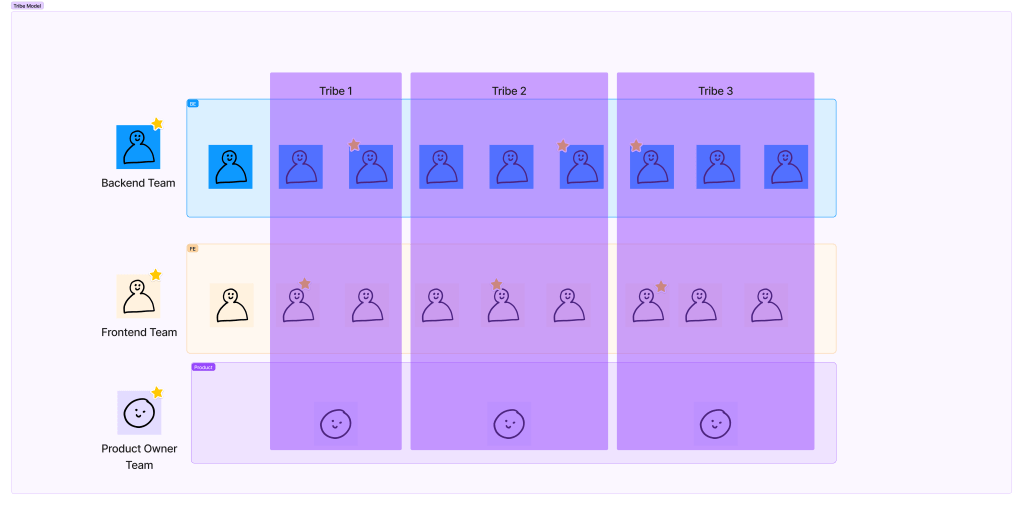
Enter the Tribe model, a concept often associated with the Spotify Engineering culture. Tribes consist of squads, each with its own PO and development team, working autonomously on specific features or components. The Tribe structure encourages collaboration and knowledge sharing while maintaining a sense of autonomy within individual squads. This model is particularly effective for larger organizations working on complex projects that demand cross-functional expertise.
Pros
- Cross-Functional Collaboration
- Autonomous Teams
- Ownership and Accountability
- In each tribe, each team can have a leader. Thus, monitoring the newcomers & current issues becomes the responsibility of this new leader rather than the team leader.
- The team leader gets updates from the tribe leader
- Tribes can be divided according to product features or goals
- Scalability
- More than one accountable person
Cons
- This way of work requires more meetings
- Communication will be difficult at first
- Complex Dependency Management
3. Project-Based: Tailoring Teams to Projects
In a Project-Based structure, teams are formed for specific projects and disbanded once the project is complete. This flexibility allows organizations to assemble teams with the right skills for a particular task. While efficient for short-term projects, it may lead to a lack of continuity and the challenge of forming cohesive, high-performing teams for each new project.

Pros
- Clear Ownership
- Tailored Team Composition
- Flexibility in Team Formation
- Alignment with Project Lifecycle
- Easy to manage, smaller teams
- Goal-based teams
- Dual reporting (PO & TL)
Cons
- Fragmented Communication
- Transition Challenges
- Risk of Redundancy
- Challenges in Cross-Functional
- Collaboration
- Complex Dependency Management
Choosing the Right Path
Selecting the ideal team structure depends on the unique needs and challenges of your project. Agile provides flexibility and adaptability, Classic offers centralized control, Tribe encourages collaboration, and Project-Based tailors teams to specific tasks. Consider the nature of your project, team size, and organizational culture when deciding which model aligns best with your goals.
In conclusion, the key to successful development lies in understanding the strengths and weaknesses of different team structures. Whether you opt for the agility of Agile, the familiarity of Classic, the collaboration of Tribe, or the flexibility of Project-Based, each model offers a unique approach to achieving successful outcomes in the dynamic landscape of software development.
Disclaimer: ChatGPT helped me with this post 🙂
 DFO
DFO 
Leave a comment